MADE, NOT MANUFACTURED
Every build begins with a conversation and ends with a music machine fine-tuned to your sound, your style, and your story.
Design & Build Approach
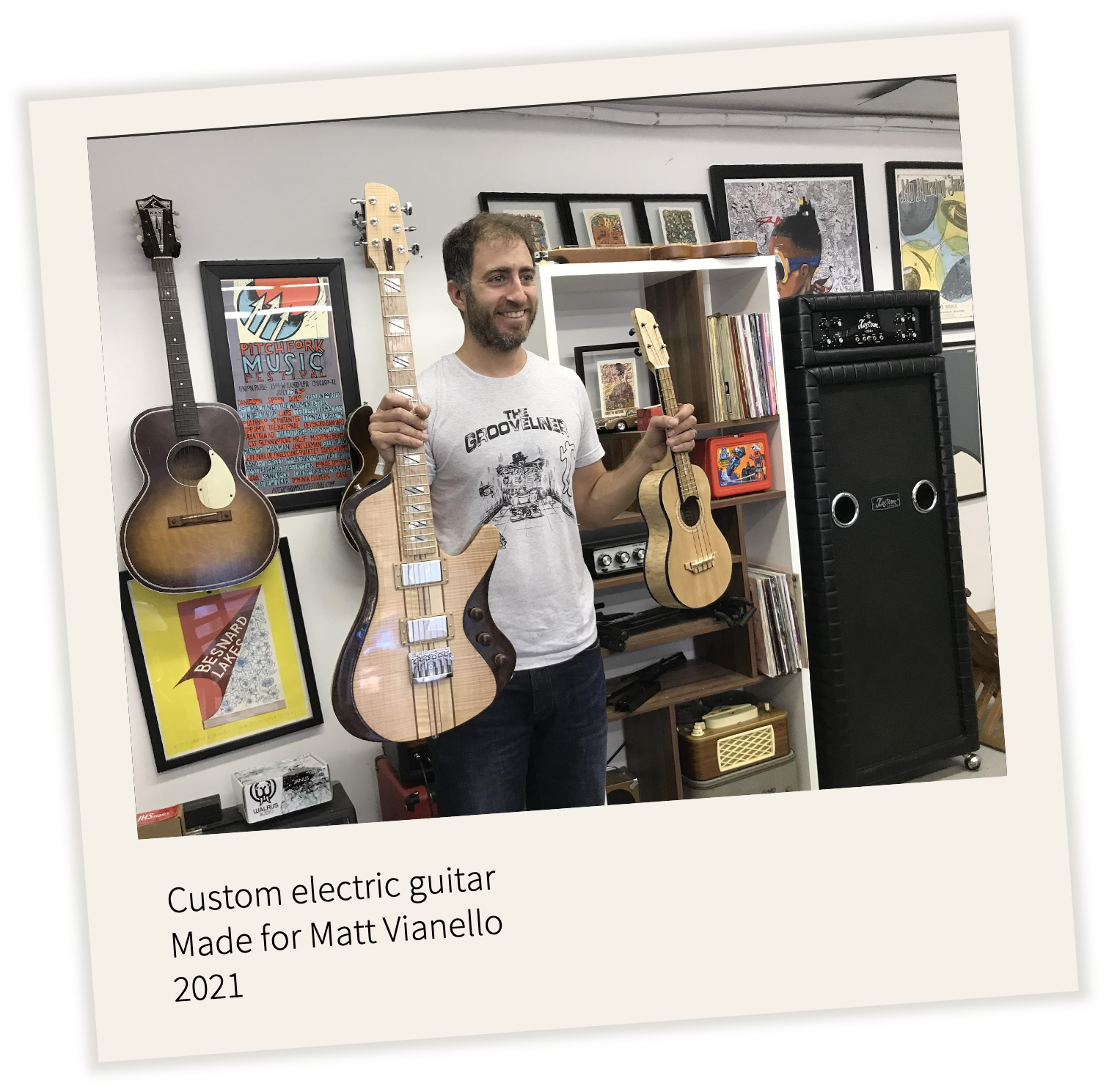
MachMachines is the most versatile luthier in the Chicago area. Coming up through Roberto-Venn School of Luthiery, Specimen Products, and Lakland, Dave has seen it all before—or he can figure it out. Regardless of acoustic or electric, guitar or bass, rock or jazz, we can co-create every element of your instrument with you.Design
Playing an instrument is a multisensory experience, but a lot of builders prioritize the senses in the wrong order. We have a specific hierarchy for how our music machines come together.
Sound. First up, your instrument has to sound great or nothing else matters. For acoustics, wood selection is everything. For electrics, pickups take the prize, but wood selection still holds second place.
Feel. If the fit and feel don’t match you as a player, then you won’t play it. We are not making wall art—although our co-founder Jen might have some opinions on your actual decor if you ask.
Style. Looks always come after sound and playability. That said, guitars look cool (and friend, you look cool playing one ;) ). We’re as flexible on style as we are on instrument type or genre, but we’d prefer to create something unique. Why get a custom-built instrument that looks like all the rest?
Story. Some of our favorite collaborative builds have included details with deep personal meaning for the player. If you’re interested in inlay, think about the design as if you were getting a custom tattoo.
Build
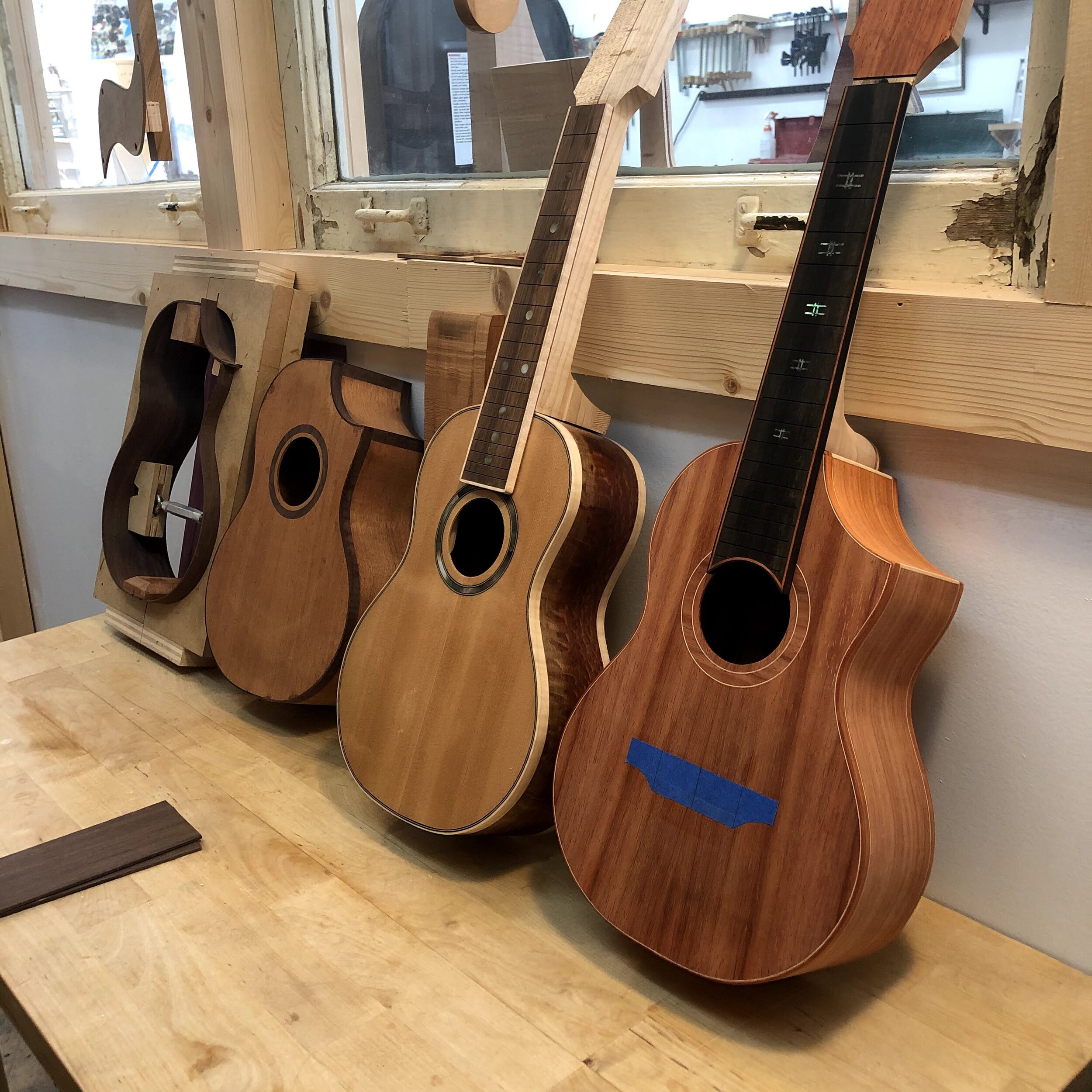
Our commitment is to the craft of lutherie over the scale of mass production.
As makers, our philosophy is less about absolutely everything being hand made—we of course use tools and buy hardware—than about the care and attention that comes with one-of-a-kind and small batch production.
We use the right tools for the job, including machinery that enhances precision and quality. What we don’t do is let speed or scale drive the process.
—
We never build from kits, we never design using AI, and our necks are always carved by hand.
What To Expect
There’s nothing quite like the feeling of pulling the trigger on a commission. It’s exciting, a little scary, and like Tom Petty says, the waiting is the hardest part. We share the pressure that it needs to come out just right. After all, your instrument isn’t just a prized possession—it’s a lifelong relationship. This is a highly collaborative process with regular updates along the way.
Here’s what you can expect to experience.
Sometimes players know exactly what they want and sometimes they need some guidance. Either way is fine with us. You’ll have an initial consultation with Dave that starts with a decision on acoustic or electric and guitar, bass, ukulele, or lapsteel. From there, you’ll talk sound.Phase 1: Conversation
For Acoustics:
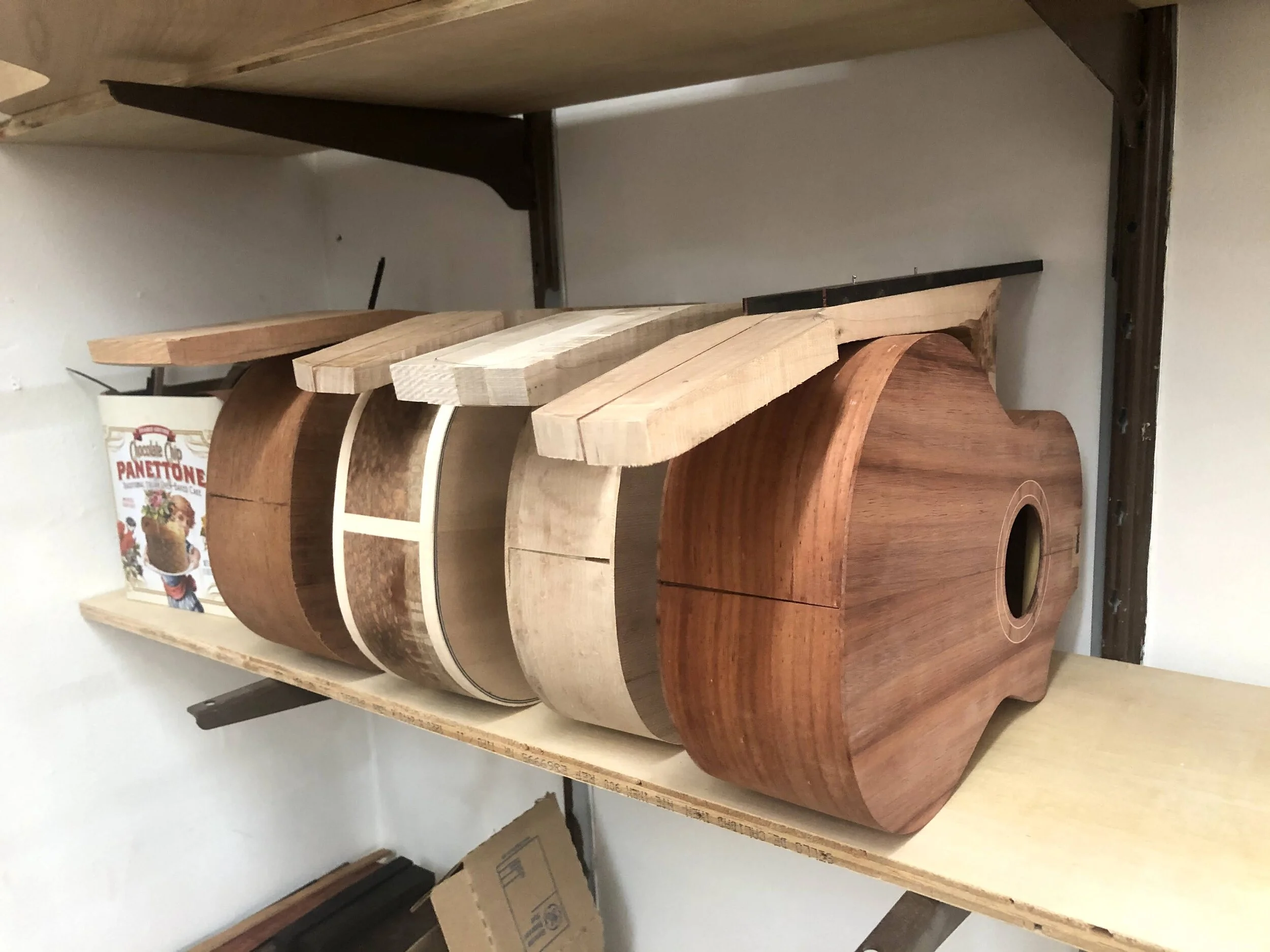
We’ll want to understand when and where you’ll play it—on stage, in a band, at home on the couch, around a campfire? That gives Dave a sense for the volume and projection that the instrument needs to have, which helps narrow down the body style recommendation and tonewoods for the top. Dave then pairs the top wood selection with a sympathetic wood for the back and sides. For example, for a bright, punchy, loud sound, he might suggest sitka spruce for the top with a rosewood back and sides.
For Electrics:
Pickups take priority. In this case, Dave will want to know what you’re listening to, what you’re playing, and if something is missing from your instrument lineup. That will help Dave recommend the right pickups for your sound.
For Both:
Fit and feel comes next. Size and scale length will influence comfortability. How you play—finger picker vs. strummer, dig in vs. light touch—informs neck shape, action, and bracing structure.
Within a week, Dave will send you a proposal that captures the conversation and provides some options on dimensions (if non-standard), wood, pickups, visual design, hardware, pricing, and estimated timeline. A hardshell case is built into the cost.
Phase 2: Proposal
Base prices for a custom instrument vary by type:
Ukuleles start at $1,000 for sopranos and $1,500 for larger sizes
Electrics start at $2,000 for guitars and $2,500 for basses
Acoustic guitars start at $3,000
To lock in the build timeline and order materials, a non-refundable 50% deposit is required.
Phase 3: Deposit
The build process typically takes 10-12 months from conversation to delivery. Dave will provide you with a private Google Photos album so you can see the progress. Sometimes your build may end up in a social post or email newsletter, but we won’t tag you without discussing it with you first.
Phase 4: Build
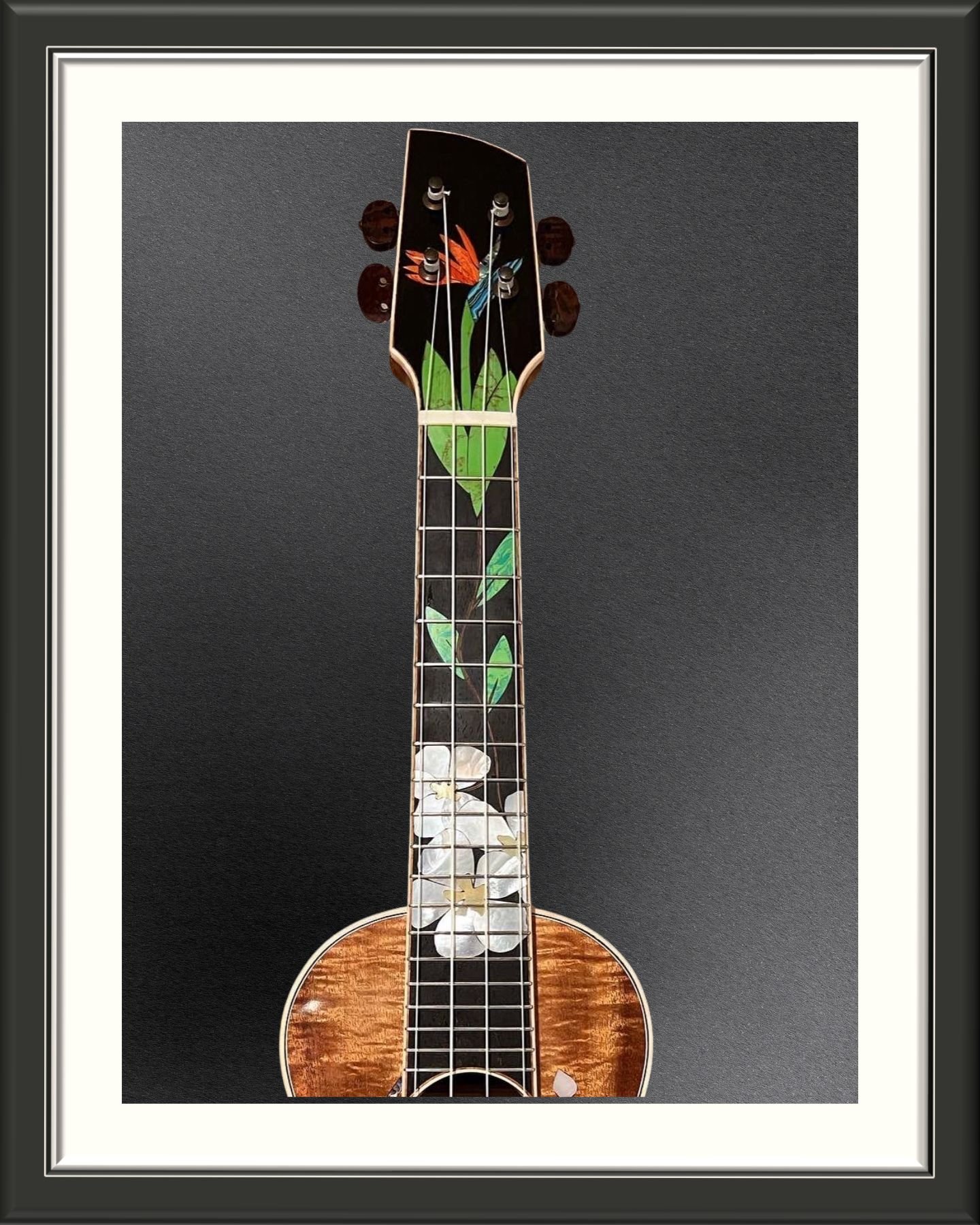
The initial consultation for inlay is no additional cost. If you don’t already know what you want, Dave approaches this like a custom tattoo discussion: is there a significant life event you want to commemorate, a meaningful object or place that can provide inspiration, or a specific shape or pattern that you really like?
If you want to move ahead with the design work, there is a non-refundable fee of $200, which will be applied to the final payment for the inlay installation should you choose to move forward. That design fee includes an initial design and up to 2 revisions. Any further revisions will incur additional fees of $50 per revision or $200 to start over.
Once the inlay design is locked, Dave will send you a quote. A 50% deposit is required.
Phase 5: Inlay (Optional)
As the build nears completion, we will organize final payment and method of delivery. You’re welcome to pick up your instrument at the MachMachines shop or pay for shipping.
Phase 6: Logistics
We’ll be as nervous as you! It’s Dave’s art, and we hope you love it for the rest of your life.
MachMachines also builds handcrafted accessories that are as thoughtfully made as our instruments. Find them here.
Phase 7: Play Time!