
What’s best: Slotted or solid headstocks?
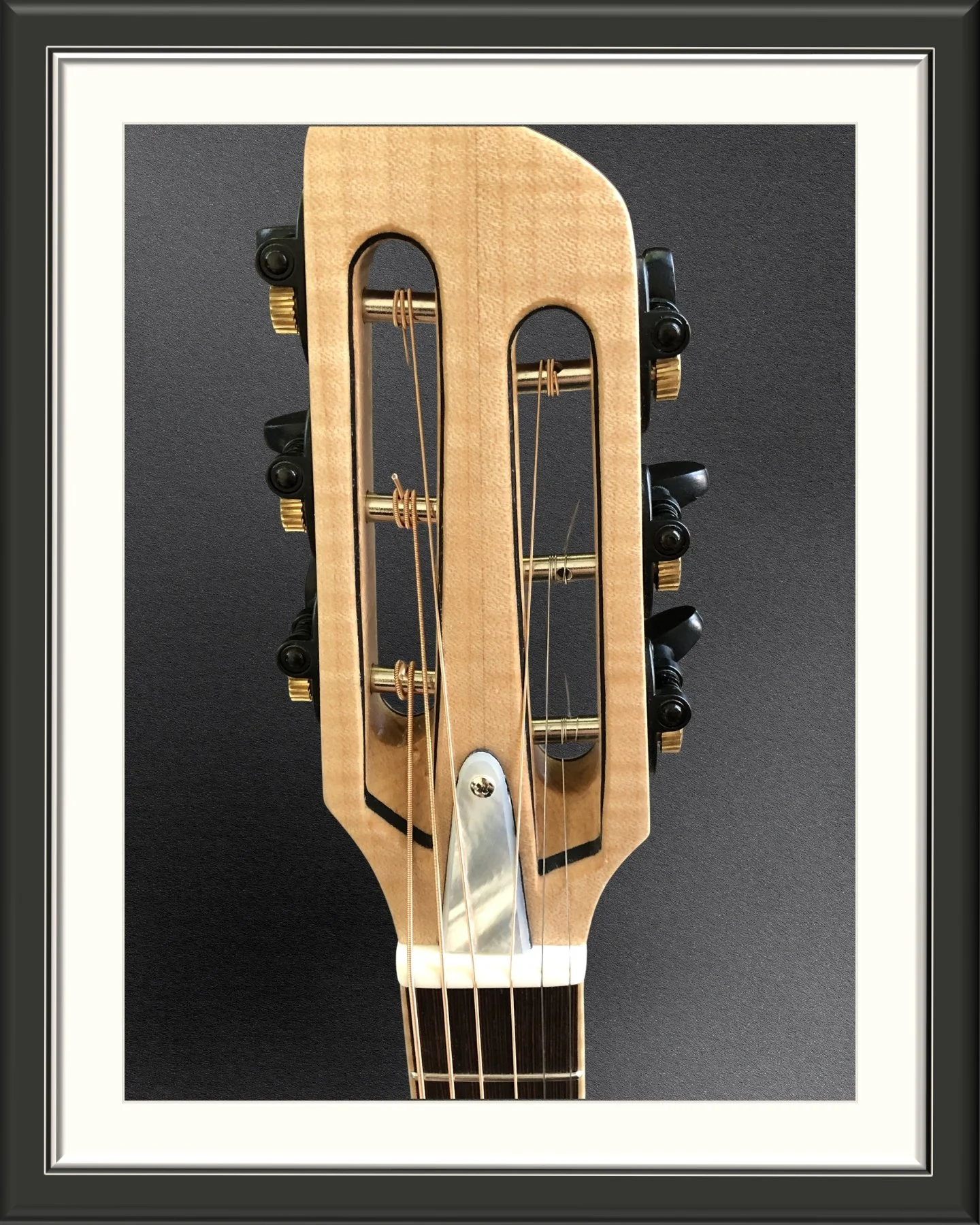
This MachMachines custom, acoustic, steel-string guitar has a slotted headstock. As you can see, the tuning machines run through the slots, so the strings wind around inside the slots. This looks awesome but can make it harder to change the strings.
During a recent consultation for a new acoustic, steel-string guitar commission, the player asked if there was any difference or benefit to choosing a slotted versus solid headstock. The short answer in this case is no, it won’t really affect the sound or playability. However, this isn’t universally true.
Slotted headstocks came from the classical guitar world.
There are two benefits to slotted headstocks for nylon-string acoustic guitars specifically:
They weigh less. Classical guitars have very light bodies; the lighter the headstock, the better the balance when holding and playing the instrument.
They help with string tension. The downward slope from the nut to the tuning machine (the break angle) is steeper with a slotted headstock, and that helps keep the strings seated in the nut slots more securely. This is important for nylon strings, which have lower tension than steel strings. For comparison, a nylon-string guitar typically has 80-100 pounds of tension load compared to a steel-string guitar, which has about 150-200 pounds.
The downside with slotted headstocks is that it is more cumbersome to change the strings. Strings coil around the tuning machines, which are inside the slots in this case.
We’ve made guitars with slotted headstocks at MachMachines, but since we don’t currently make classical guitars, that is an aesthetic choice. For a steel-string guitar - acoustic or electric - a slotted headstock does not materially change the playability of the instrument.
For a steel-string guitar, the shape of the headstock has the bigger impact.
Going back to break angles, it’s not just about slope down but the vector out of the string from the nut to the tuning machine. For example, headstocks that flare out a lot at the top, like you’ll see on some D’Angelicos, produce a sharper vector angle from the nut. Because the slot of the nut is straight in most cases, this introduces additional stress and wears down the nut faster.
In general, it’s best for strings to have the straightest shot possible to the tuning machines. This is especially true for any guitar with tremolo/vibrato, because the trem bar functions by adjusting the slack of the string, creating even more friction in the nut slot.
There are two typical ways to achieve a string vector that’s as straight as possible.
All tuning machines in a row on one side. This style was popularized by Fender.
Three tuning machines on each side, but the headstock narrows at the top. You’ll see this on most MachMachines instruments.
We use a slotted headstock on this Bell Model acoustic guitar and a solid headstock on this Cuyler Model electric guitar.
Author: David Showalter, MachMachines Co-founder & Head of Instruments